When I started with JBrick Heating and Cooling, owner Jason had two problems keeping him up at night. He felt he had to be on-site for every big job. And he couldn't get a straight answer on profit, because the way work got entered made reporting on job costing almost impossible.
You can't manage numbers you can't trust. So Month 1 wasn't about reading JBrick's reports. It was about fixing what went into them. Here's what we did in the first five weeks.
1 Getting found
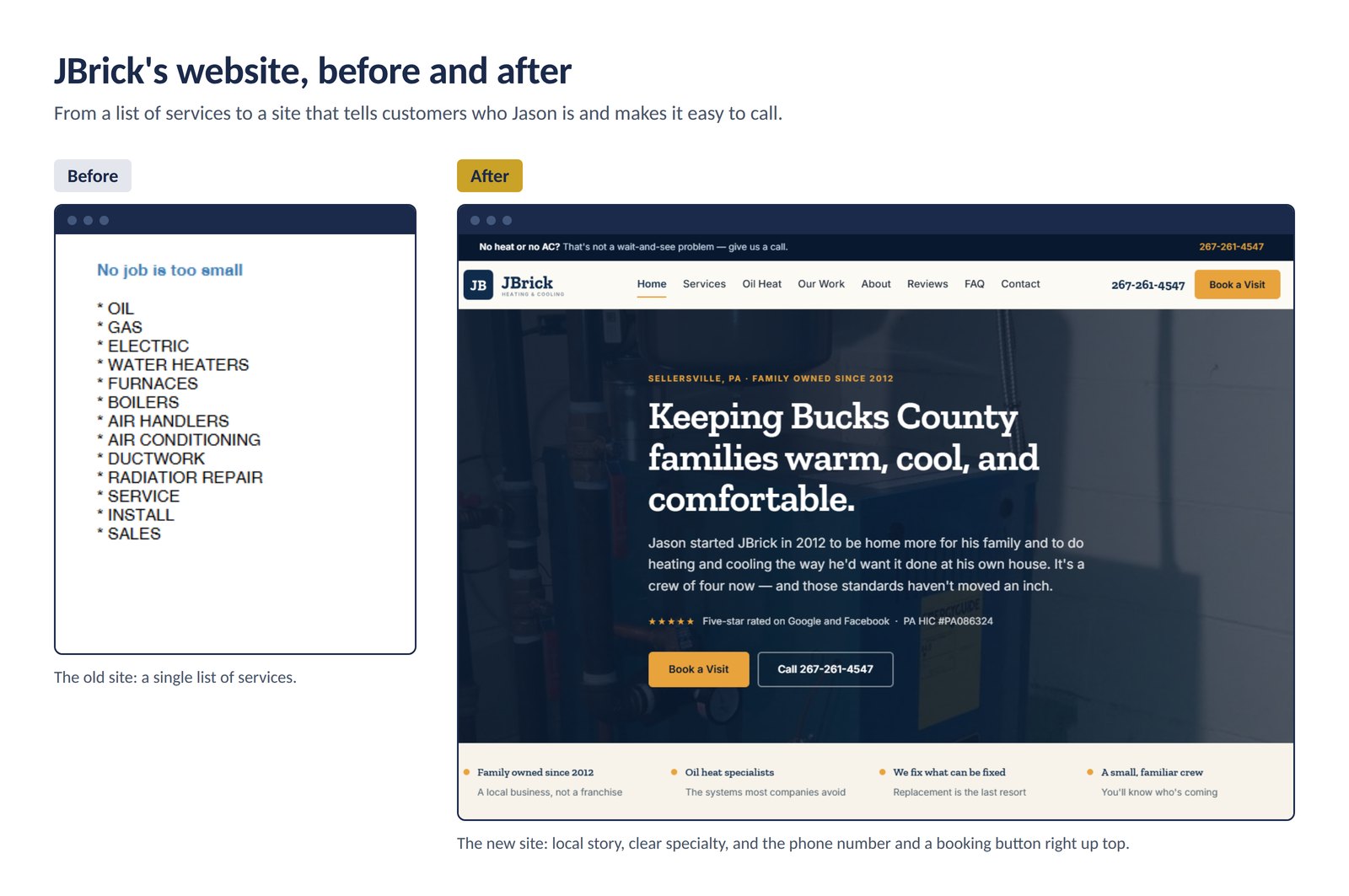
JBrick's old website was a single list of services under the line "No job is too small." It was honest, but it gave Google and customers almost nothing to work with.
- Rebuilt the website from the ground up with My Web Sidekick.
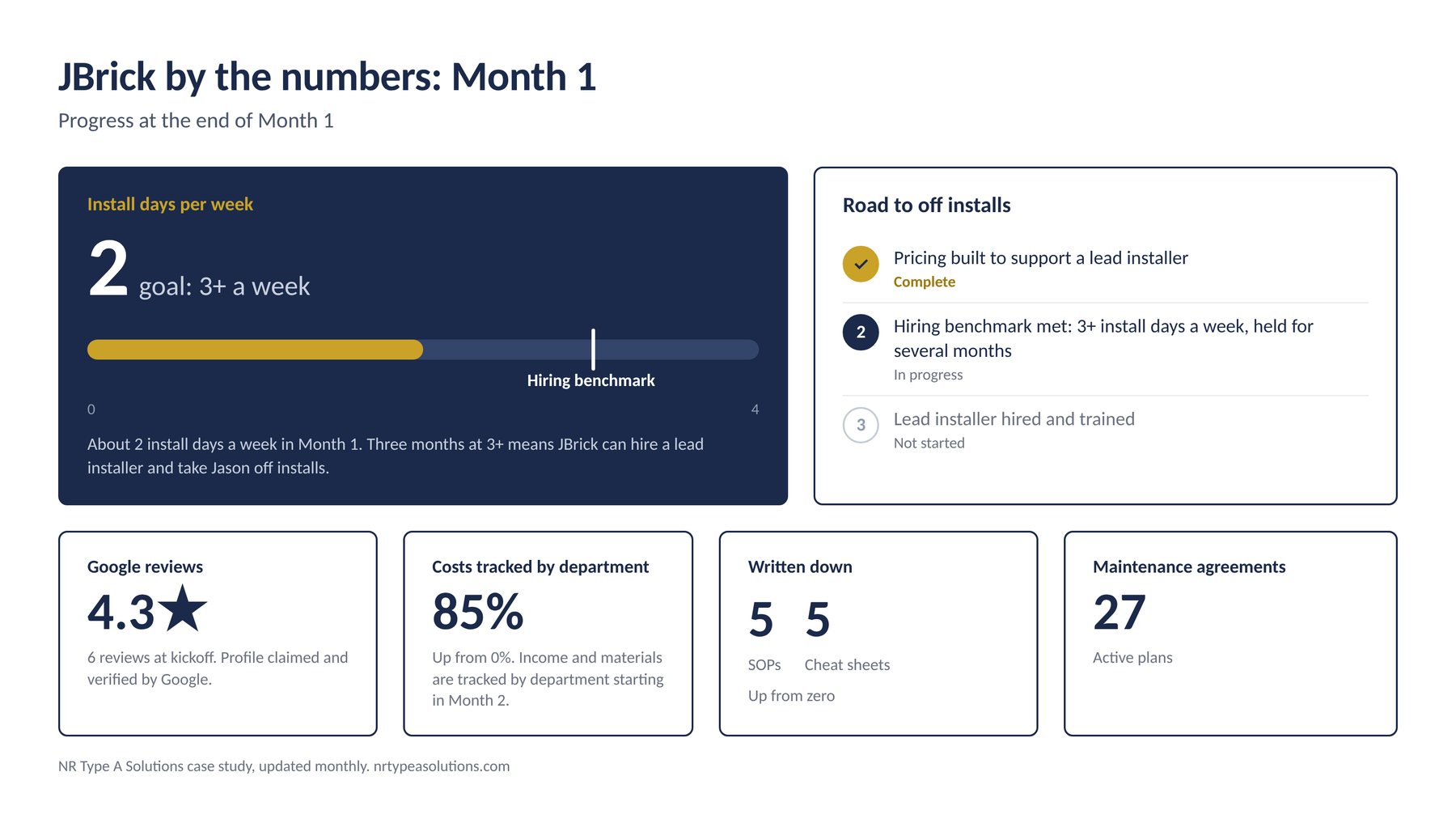
- Claimed JBrick's Google Business Profile and started adding posts and photos. Google has now officially verified it.
- Set up lead source tracking, so every call gets tagged with how the customer found JBrick.
The early payoff: a customer called from the new website within four weeks of launch.
2 Fixing the numbers and plugging leaks
This was the heart of the month. Collaborating with JBrick's accountant, we restructured their QuickBooks Desktop setup so it can actually answer the question "where's the money?"
- Created departments for Install, Service, and Maintenance, so every dollar can be reported by department.
- Changed how expenses are entered, so overhead gets split across departments instead of sitting in one pile.
- Reconfigured key accounts to best practices for cleaner reporting.
- Built a workflow that splits technician payroll by department, based on the actual time logged in their field software.
- Cleaned up how payroll taxes are entered, for more accurate reporting.
- Calculated true technician cost and overhead for each department.
- Launched a new purchase order system, so materials track to the right department and job.
We also closed two leaks that had nothing to do with reports.
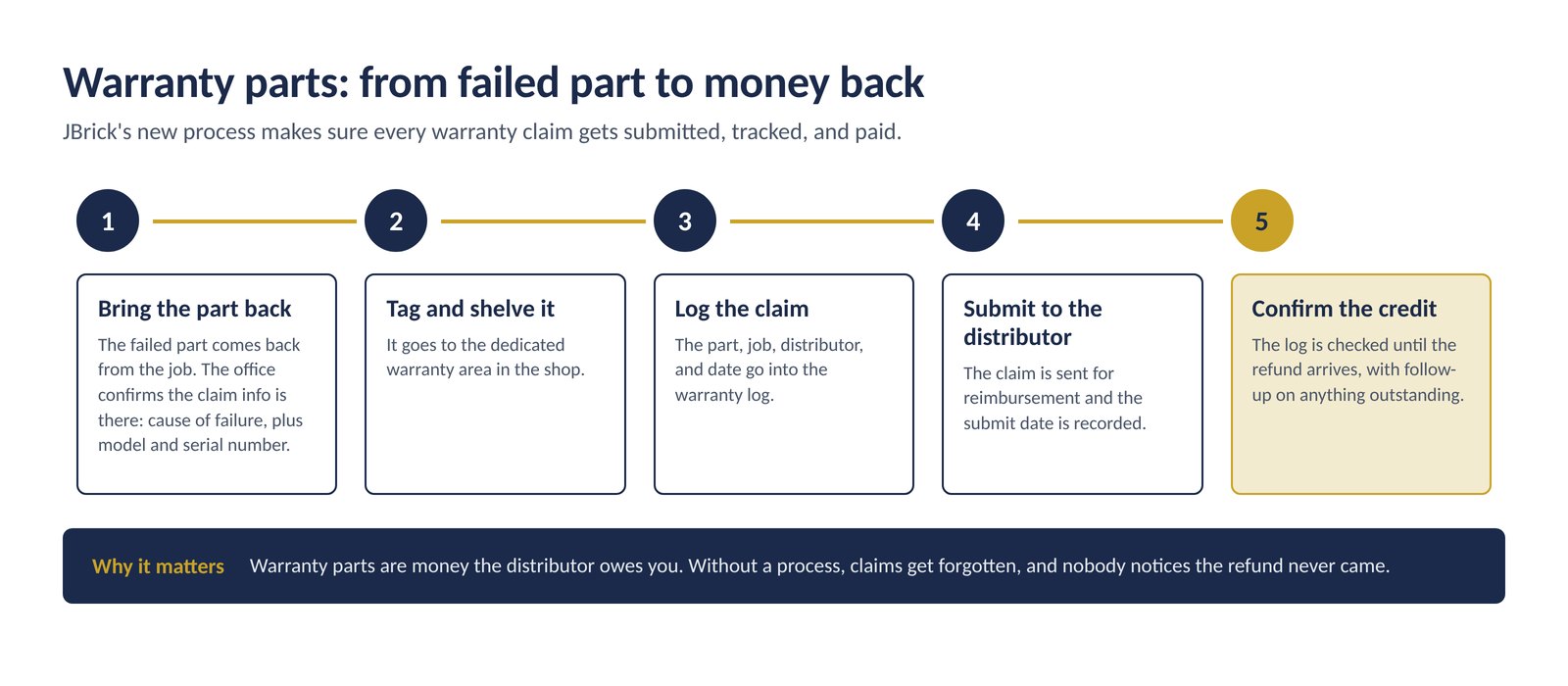
Warranty parts. Parts under warranty can be reimbursed by the distributor, but only if someone submits the claim and follows up. We set up a dedicated space in the shop and a tracking system for every claim, so JBrick can confirm each refund actually arrives.
Payroll timing. JBrick used to pay on estimated hours and correct the difference the following payroll. If someone quit without notice, they could walk away already overpaid. We restructured the payroll schedule so paychecks reflect actual hours worked.
3 Pricing every job for profit
Once we had true costs by department, we could price properly.
- Updated pricing for every department, targeting 10% net profit plus a 3% marketing budget. A markup on equipment and parts funds a reserve for warranty work and callbacks, plus a profit on materials.
- Built the pricing on the company Jason is building, not the one he has today. It already covers the cost of adding a lead installer to payroll, which is the key to getting Jason off installs.
- Built a job costing tool for large jobs and installs. It produces the quote, then lets JBrick enter actual costs once the job is done, showing real profit on every job.
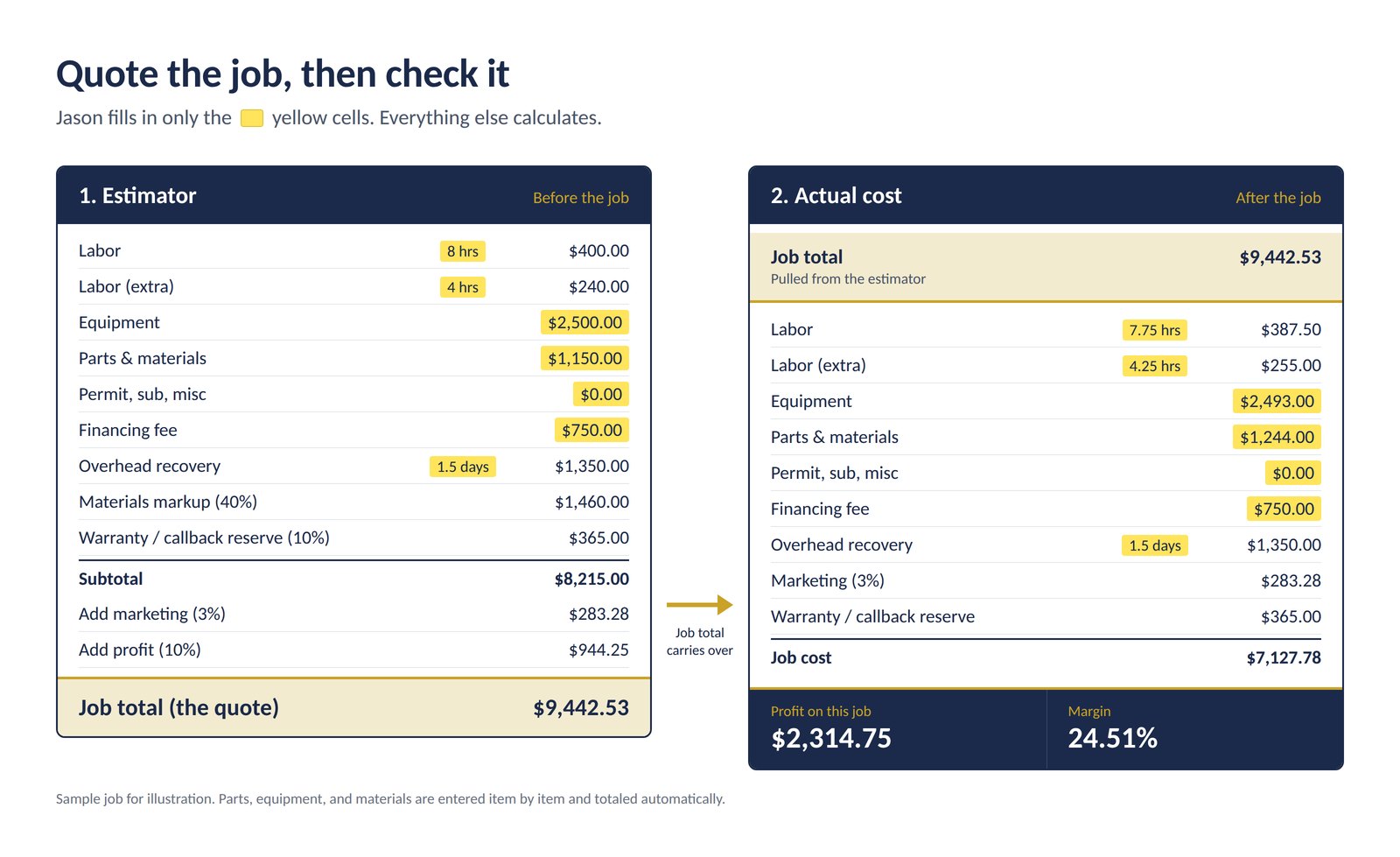
That tool is also a first step toward Jason not needing to be on every job site. When the numbers are visible, the job doesn't depend on him keeping it all in his head.
4 Making it stick
None of this matters if it's forgotten in three months.
- Built a cloud drive for company documents, with 5 SOPs and 5 cheat sheets so far.
- Built a calendar of daily, weekly, monthly, and quarterly routines, each linked to its cheat sheet. That includes a set rhythm for revisiting pricing, with instructions for how to do it.
- Streamlined the maintenance agreement workflow so scheduling runs smoothly. JBrick has 27 active agreements.
This is the quiet work that makes a business outlast its owner. The knowledge lives in the company now, not just in Jason.
"The biggest thing is getting everything organized and knowing where we're at numbers-wise. Now we can see our numbers quickly, and it's reassuring to know we're in good shape. It was nice to look everything over, see where our weak spots were, and know where we need to start working. I'm a technician at heart, so seeing how to develop each piece and procedure has made it all make sense."
The first real numbers
Month 1 was a trial month for JBrick's new bookkeeping workflows. For the first time, costs are tracked by department: 85% of this month's costs now land in Install, Service, or Maintenance, up from none before. Starting in Month 2, income and materials are assigned to a department as they're entered too, so Month 2 brings JBrick's first full profit-by-department report.
Installs averaged about 2 install days per week in Month 1. The benchmark for hiring a lead installer is 3 or more install days a week, sustained for three months. That's the gap we'll be tracking every month from here.