In Month 1, I fixed the data so the numbers could be trusted. Month 2 was about putting those numbers to work: collecting money that was already earned, showcasing the reputation JBrick has built, and seeing for the first time which parts of the business make money. Read Month 1 →
1 Getting found
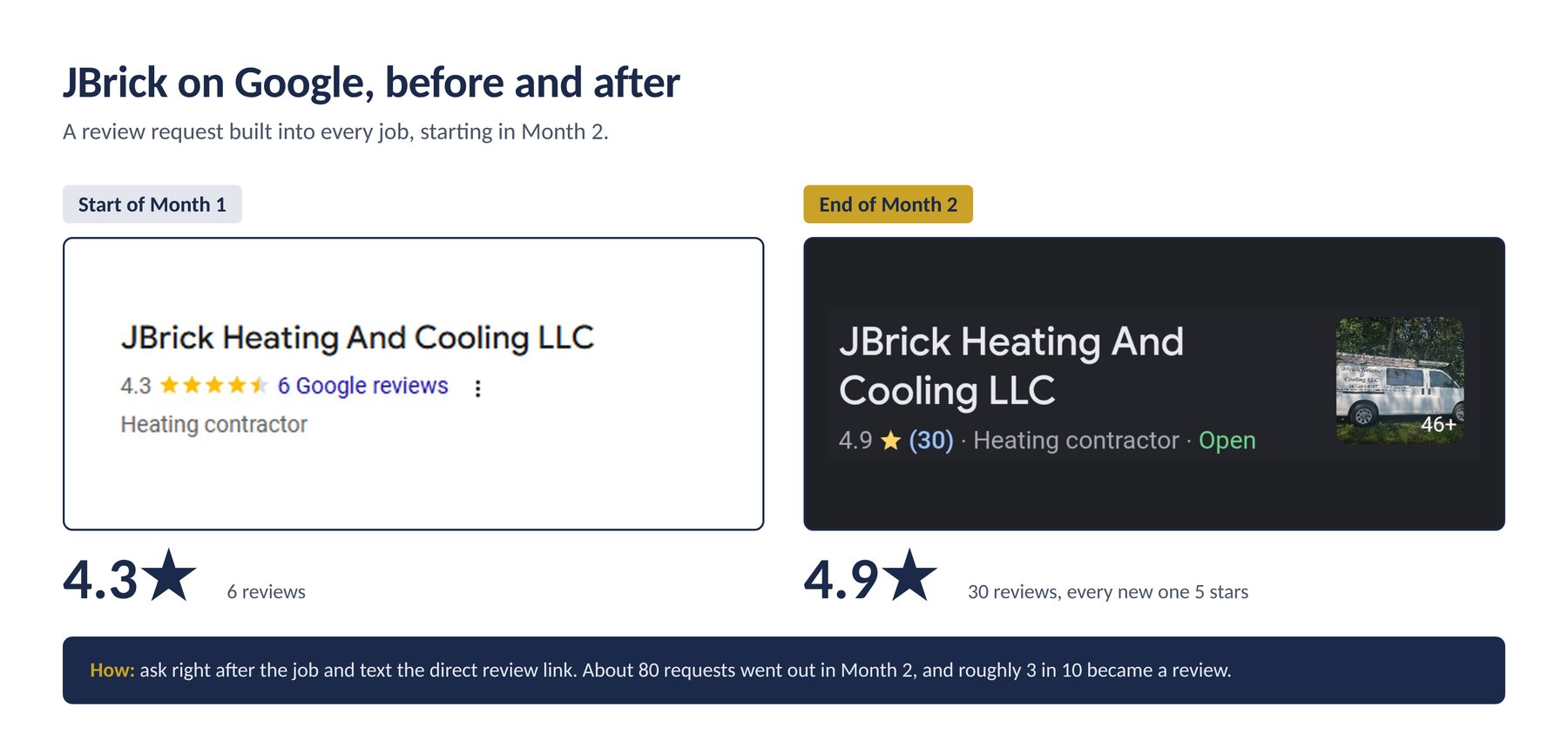
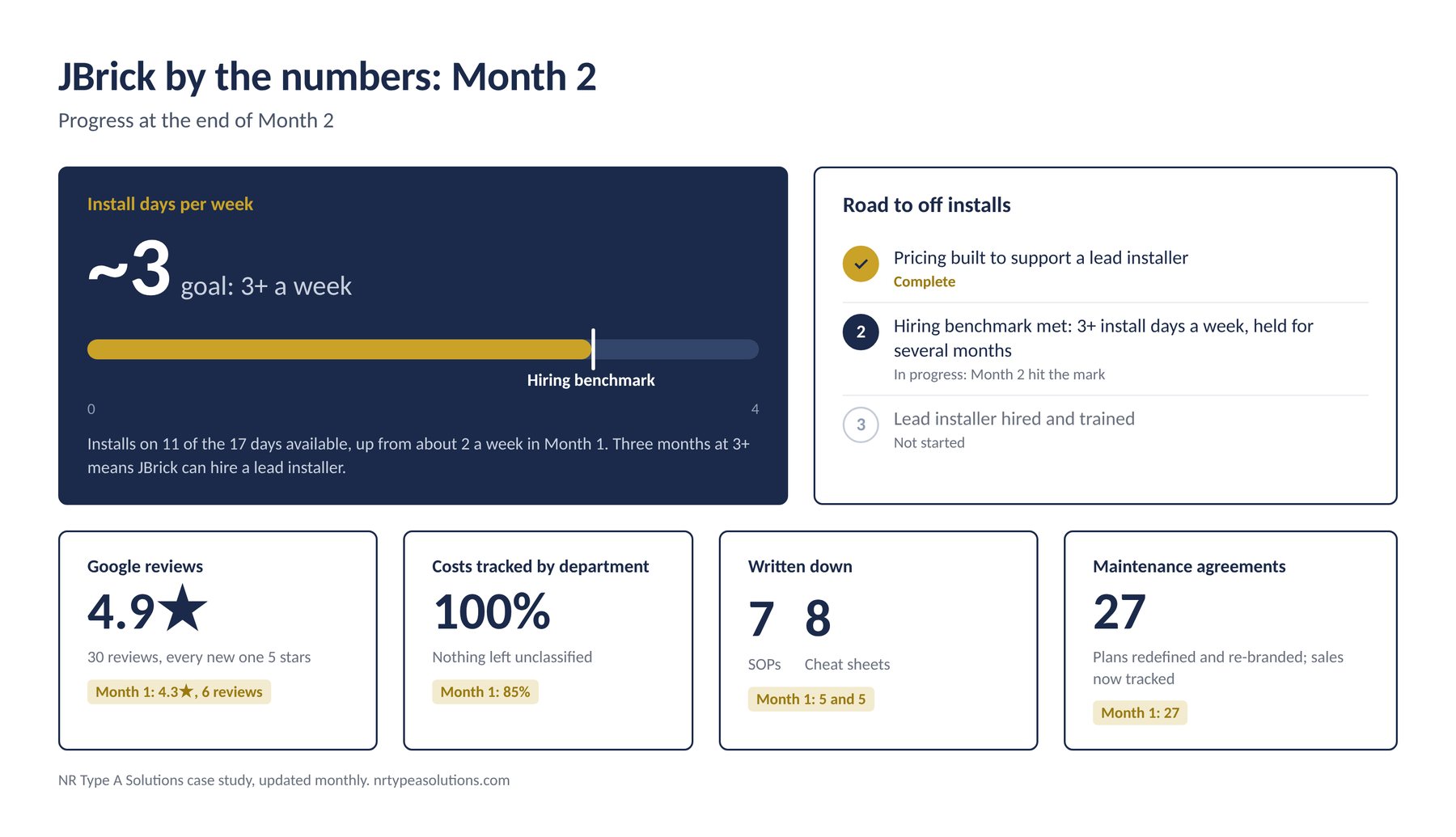
Reviews. We put a review request protocol in place: ask right after the job, text the direct link, and make it part of every job. About 80 requests went out this month, and roughly 3 in 10 became a review. JBrick went from 6 Google reviews to 30, every new one 5 stars, and the rating moved from 4.3 to 4.9.
Visibility. Profile views went from 120 to 159, up about 33% from Month 1 and about 35% from the same month last year. Profile interactions went from 26 to 31, up about 19% from Month 1 and about 41% from last year. Content is now scheduled to the Google profile and social media two to three times a week, so the profile looks as active as the business is.
Referrals. A referral rewards program launched this month, with gift cards scaled to the size of the referred job.
2 Collecting what's owed and plugging leaks
Open AR. Using the reporting tools already built into JBrick's software, I uncovered unpaid invoices and started with the ones more than 90 days old. The result was a five-figure recovery this month. Nearly everything we found was simply unpaid, and only a couple of invoices were written off. There is more to recover, and the office manager is working through the rest.
The charge nobody noticed. While reviewing credit card statements, I found a monthly charge from a payment processor JBrick cancelled in 2022. It had kept billing for four years. The cancellation was documented, but the charge was small enough to slip by. We've filed a dispute, and I'll report back on the outcome.
3 Seeing where the profit is
Month 2 is the first month JBrick's books are fully classified by department: Install, Service, and Maintenance, with nothing left unclassified, up from 85% in Month 1. A new materials process now puts material costs in the right department at the time of purchase. These figures are preliminary, since some credit card purchases are still being entered.
A first look shows installs bringing in about 53% of this month's revenue, maintenance about 26%, and service about 21%. One month is a snapshot, not a trend, so we'll watch these over the next four months.
4 Selling the maintenance plans
JBrick offers several options, and most customers choose the lowest-priced cleaning without a maintenance plan. So the work this month wasn't about pushing harder. It was about making the plans clear and worth the extra charge.
- We defined what each plan includes and why the added cost is worth it to the customer.
- Began coaching technicians to bring up the plans in conversation.
- I reviewed the actual cost of each plan to adjust pricing.
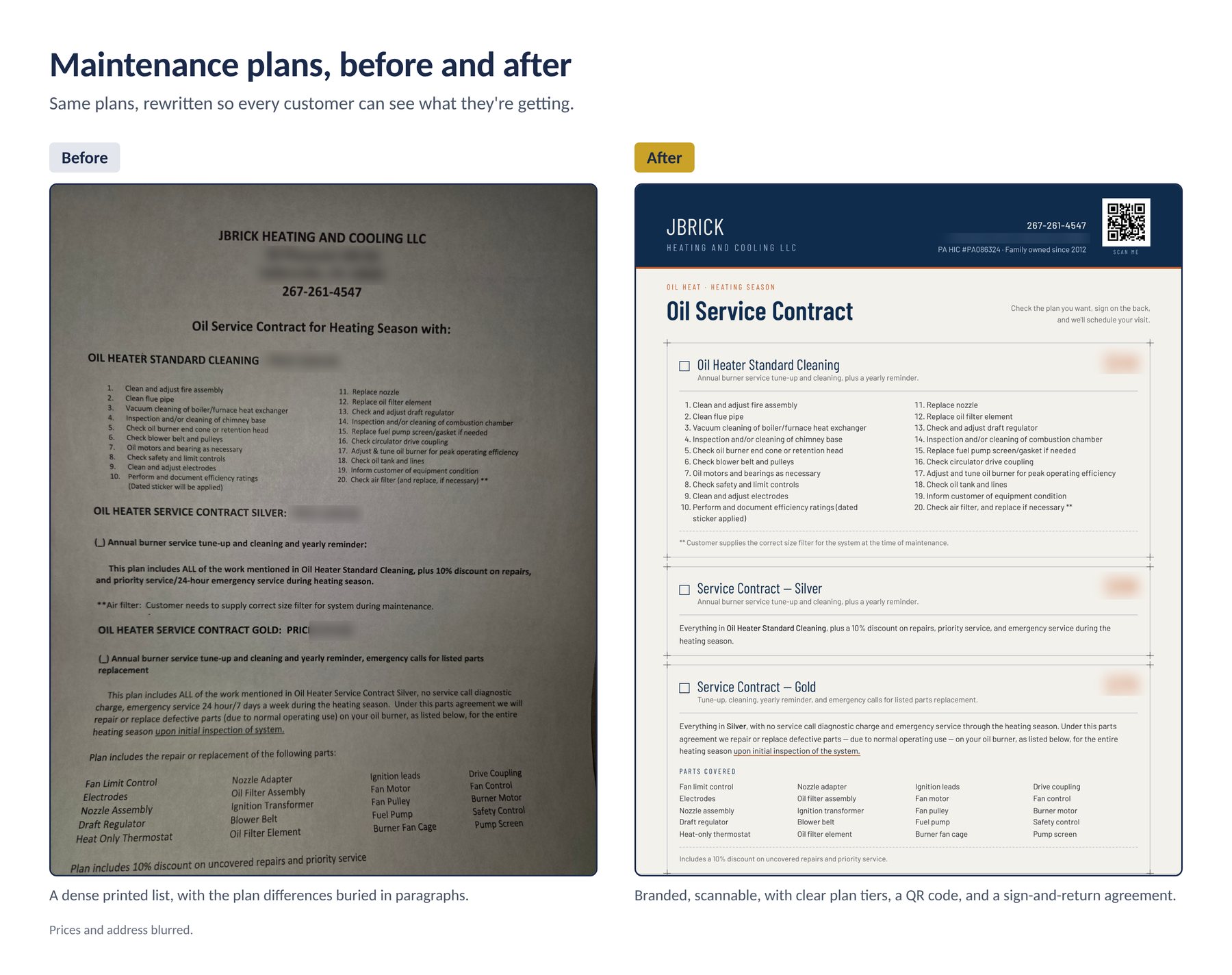
- The existing plan documents were re-branded, and we started artwork for plans that weren't documented yet, so every customer gets a page showing what they're getting.
- A new procedure tracks plan sales in JBrick's software.
The agreement count held at 27 this month. These changes are the foundation, and Month 3 is when we'll see whether they move the number.
5 Making it stick
- SOPs went from 5 to 7. The new ones are the review request protocol and the technician standards, and an 8th is in progress.
- Technician standards and dispatch procedures were built and rolled out.
- Cheat sheets grew from 5 to 8.
- Five job descriptions were written, and technician development items have begun.
- A weekly team meeting now has a set agenda, and the first company meeting rolled out these changes.
Install days: the number that matters
An install at JBrick can take one day or most of a week, so counting jobs doesn't tell the whole story. I track install days instead. This month, installs were scheduled on 11 of the 17 days available, about three install days a week (some days weren't available for installs). The benchmark for adding a lead installer is three or more install days a week, held over several months. Month 2 put us right at that mark. Now we have to hold it.
"The biggest difference is we're getting found online, and I'm not spending anything extra on marketing yet. My office manager runs the day-to-day more independently, we know what to post and when, and we're rolling out clear procedures to the guys. Working with our information is easier than it's ever been. Putting procedures in place now is building the structure that prevents growing pains."